

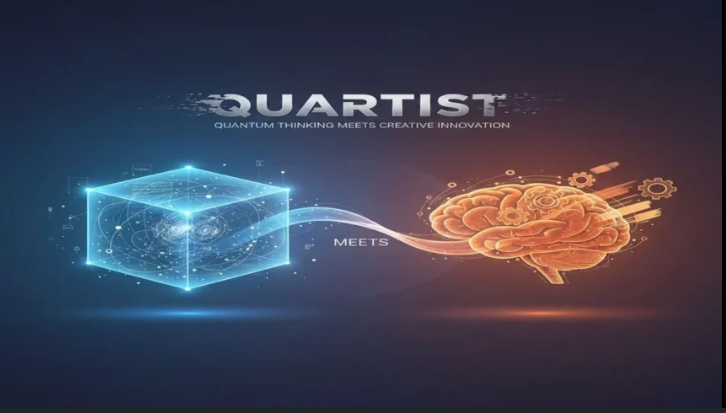
In the lexicon of modern creativity, the term “Quartist” occupies a fascinating intersection. On one hand, it represents a shift in interior design and material science, referring to those who champion quartz as the ultimate surface material for homes . On the other hand, it defines a burgeoning cultural and artistic movement—a philosophy where creators blend traditional techniques with digital innovation to challenge the status quo of contemporary art .
This duality makes the Quartist unique. Whether applied to a kitchen countertop or a digital NFT painting, the underlying theme is consistent: endurance, quality, and the fusion of nature with human ingenuity.
The Material World: Quartz in Design & Architecture
Before exploring the artistic movement, we must acknowledge the literal foundation of the word: quartz. As a material, engineered quartz has become a cult favorite among architects and homeowners for its unrivaled practicality .
The Science Behind the Stone
Unlike natural stones like marble or granite, which are cut directly from quarries, quartz countertops are engineered. They consist of approximately 90 percent ground natural quartz aggregates (one of the hardest minerals on earth) combined with polymer resins and pigments . This recipe creates a non-porous surface that is brutally strong.
Why Designers Covet Quartz
For a “Quartist” of the material world, the appeal is obvious. Quartz offers a unique value proposition:
-
Hygiene & Maintenance: Because it is non-porous, quartz never requires sealing (unlike granite). It is resistant to stains, scratches, and even household chemicals .
-
Durability: It resists chipping and cracking while handling the thermal shocks of daily kitchen life.
-
Aesthetic Versatility: Manufacturers can manipulate the pigments and resins to mimic the veining of Carrara marble, the grit of industrial concrete, or the void of pure minimalism .
The Manufacturing Process
Creating a quartz slab is an art form. It involves vacuum compressing the natural stone aggregates with binding agents under extreme pressure, followed by a 45-minute curing in an industrial oven. The result is a hard, impenetrable canvas that requires only soap and water for upkeep .
The Philosophical Realm: The Quartist Art Movement
Shifting focus from the kitchen to the gallery, the Quartist movement is redefining cultural expression. It positions itself as a rebellion against the rigid boundaries of conventional art forms .
History and Origins of the Movement
The Quartist movement emerged in the late 20th century but gained traction in the digital age. Rooted in the avant-garde traditions of Dadaism and Surrealism, it arose from a desire for authenticity in an increasingly artificial world. Early adopters worked collaboratively across disciplines—blending visual arts with music and performance—to break down the silos that traditionally separated creators .
Key Principles and Beliefs
To identify as a Quartist in the cultural sense, one adheres to specific tenets:
-
Interconnectedness: Art, music, fashion, and lifestyle are not separate; they inform one another.
-
Tech-Humanism: Unlike purists who reject technology, Quartists embrace AI, coding, and digital tools to enhance human storytelling .
-
Inclusivity: The movement argues that culture must be accessible and democratic, utilizing social media to bypass traditional gatekeepers .
-
Sustainability: Many Quartists advocate for eco-conscious practices, ensuring that innovation does not come at the cost of the planet .
Impact Across Creative Industries
The ethos of the Quartist is shaping how we interact with every aspect of modern life.
Art and Digital Expression
In the visual arts, Quartists are pioneers of participatory experiences. They blur the lines between creator and observer. For example, artists like Refik Anadol use data-driven AI to create mesmerizing installations that change in real-time based on environmental inputs . They reject the static nature of Renaissance art in favor of living, breathing digital organisms.
Music and Genre Fusion
Musically, Quartism manifests as the death of genre. Quartist musicians refuse to be boxed into “hip-hop” or “rock.” Instead, they create a kaleidoscope of sound, mixing jazz with electronic beats or classical strings with auto-tuned vocals, creating an auditory experience that defies categorization .
Fashion and Lifestyle
Fashion reflects this through deconstruction and utility. Quartist fashion brands prioritize clothing that serves a function while making a bold, individualistic statement. The lifestyle is one of authentic experience over material accumulation—seeking out unique travel, food, and social interactions that feel “real” rather than curated for social media .
Comparative Analysis: Quartz Material vs. Quartist Philosophy
-
Caesarstone: A brand that perfected the “recipe” for quartz, offering over 100 patterns from rusted industrial looks to pure whites .
-
Mor Krisher: A designer who treats quartz creation like baking a cake, experimenting with rust, lichen, and mirrored glass to mimic nature .
Artistic Pioneers:
-
Beeple (Mike Winkelmann): A Quartist pioneer who legitimized digital art by selling an NFT for $69 million, forcing the traditional art world to pay attention to digital creation .
-
Zoe Zhang: A painter who uses vivid, non-linear narratives to challenge traditional visual norms, embodying the Quartist spirit of emotional chaos .
Controversies and Criticisms
No movement is without its detractors. The Quartist philosophy faces several critiques:
-
Elitism vs. Accessibility: While Quartists claim to be inclusive, critics argue that the heavy reliance on expensive technology (AI software, VR rigs, NFT gas fees) creates a new, tech-based elitism that locks out traditional artists .
-
Substance vs. Shock Value: Some traditionalists argue that the movement prioritizes “shock value” and technological gimmicks over genuine emotional substance and craftsmanship. They view the rejection of traditional techniques as a loss of essential human skill .
-
Environmental Hypocrisy: Despite the emphasis on sustainability, the energy consumption required for blockchain NFTs and digital rendering farms raises questions about the movement’s true environmental impact.
Conclusion:
The Quartist—whether the homeowner installing a durable quartz countertop or the artist coding an AI-driven mural—represents a shift toward quality and integration.
For the material scientist, it is about creating surfaces that withstand the test of time without sacrificing beauty . For the artist, it is about creating a culture that withstands the test of trends by remaining fluid, inclusive, and technologically aware .
The future of Quartism lies in the balance of these two worlds. As technology evolves, we will likely see the lines blur further. Imagine a “Quartist” designing a smart kitchen island made of engineered quartz that doubles as an interactive digital display for cooking tutorials. The material becomes the medium. The philosophy becomes the function.
To embrace being a Quartist is to embrace the idea that we do not have to choose between the natural and the manufactured, or the traditional and the digital. We can, instead, fuse them to create something entirely new.
FAQs
Q1: Is a “Quartist” primarily a designer or an artist?
A: It depends on the context. In architecture and real estate, a Quartist is a designer who specifies quartz stone. In cultural theory, a Quartist is a multimedia artist. The term is a homonym with two distinct professional applications .
Q2: Is Quartist art just a trend?
A: While some skeptics view it as a trend driven by NFT hype, others argue it is a natural evolution of art in the digital age. The focus on “quantum creativity”—blending abstract ideas with tech—suggests it has staying power .
Q3: Why should I choose Quartz over Marble for my home?
A: If you value durability and low maintenance, quartz is superior. Marble is porous and etches easily (reacts with acids). Quartz is non-porous, does not require sealing, and is resistant to stains from coffee or wine .
Q4: Can anyone become a Quartist?
A: Yes, the movement is inherently inclusive. You do not need a formal art degree. You need a willingness to experiment with cross-disciplinary methods (mixing painting with coding, or music with visual design) and a desire to challenge traditional norms .
Q5: Is Quartist design sustainable?
A: Material-wise, quartz uses natural aggregates, but the resins are plastic-based, raising environmental concerns. Culturally, the Quartist movement actively pushes for sustainable practices, though the energy use of digital art (AI/crypto) remains a subject of debate .
 M Usman