

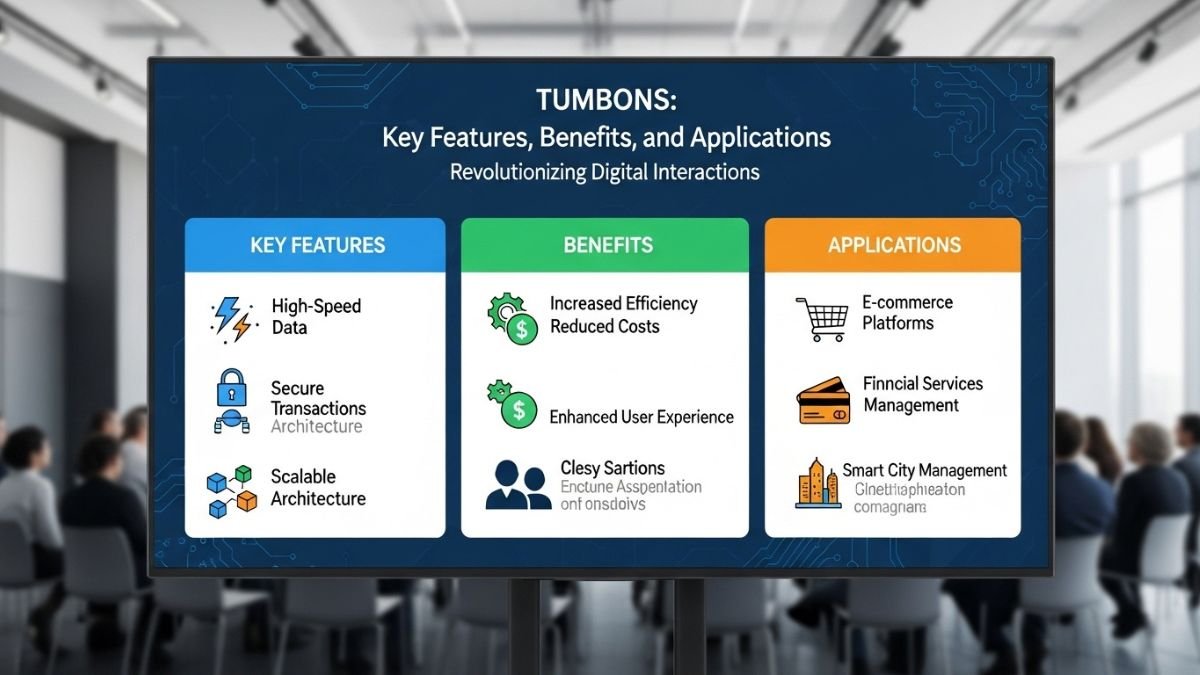
Tumbons is a unique and emerging concept that is steadily gaining attention in modern discussions surrounding innovation, organization, and adaptive systems. While the term itself may seem unfamiliar, represents a powerful framework that blends flexibility, structure, and efficiency. In today’s rapidly evolving world, offers a fresh perspective on how individuals and organizations can manage complexity while maintaining clarity.
The significance of tumbons lies in its ability to adapt across various industries and contexts. From business operations to creative workflows, helps streamline processes and encourages innovative thinking. Understanding is essential for those who aim to improve productivity and stay competitive in an increasingly dynamic environment.
The Concept and Meaning of Tumbons
Tumbons can be described as a strategic methodology that focuses on balancing structure with adaptability. Unlike traditional systems that rely heavily on rigid frameworks, encourages a more fluid approach. It allows users to adjust processes based on changing conditions while maintaining overall efficiency.
At its core, is about harmonizing multiple elements within a system. It promotes the idea that flexibility and organization can coexist, leading to better outcomes. This makes particularly useful in environments where change is constant and innovation is necessary.
Key Features of Tumbons
To fully understand , it is important to examine its defining features. These characteristics highlight why is becoming increasingly relevant.
Flexibility in Tumbons Systems
Flexibility is a central aspect of . It allows users to modify strategies and workflows according to evolving needs, ensuring continued effectiveness.
Efficiency Through Tumbons
emphasizes efficiency by simplifying processes and eliminating unnecessary steps. This results in better use of time and resources.
Coordination in Tumbons Frameworks
Coordination is another key feature of . It ensures that different components of a system work together seamlessly, improving overall performance.
Applications of Tumbons in Modern Fields
is a versatile concept that can be applied in a wide range of industries and professional settings.
Tumbons in Business Management
In business environments, is used to streamline operations, improve workflow management, and enhance strategic planning.
Tumbons in Technology Development
Technology professionals use to design efficient systems, improve user experience, and ensure smooth integration of processes.
Tumbons in Creative Industries
Creative professionals benefit from by using it to organize ideas, manage projects, and maintain consistency across different stages of production.
Table: Tumbons Compared to Traditional Approaches
| Aspect | Tumbons Approach | Traditional Approach |
|---|---|---|
| Flexibility | Highly adaptable | Fixed and rigid |
| Efficiency | Streamlined processes | Often time-consuming |
| Coordination | Integrated and seamless | Fragmented |
| Scalability | Easily scalable | Difficult to expand |
| Problem-Solving | Dynamic and creative | Linear and predictable |
This table illustrates how offers a more modern and efficient alternative to conventional systems.
Benefits of Implementing Tumbons
Adopting provides numerous benefits that can enhance both individual and organizational performance.
Improved Productivity with Tumbons
enhances productivity by focusing on essential tasks and reducing unnecessary complexity.
Better Decision-Making Through Tumbons
By combining structure with flexibility, supports more effective and informed decision-making.
Scalability of Tumbons Systems
systems are designed to grow and adapt, making them suitable for both small and large-scale applications.
Challenges Associated with Tumbons
While offers many advantages, it also presents certain challenges that must be considered.
Adoption Challenges in Tumbons
Transitioning to may require a shift in mindset, particularly for those accustomed to traditional systems.
Implementation Complexity of Tumbons
Setting up systems can involve detailed planning and adjustments, especially in complex environments.
Maintaining Balance in Tumbons
Ensuring the right balance between flexibility and structure can be challenging but is essential for success.
Table: Challenges and Solutions in Tumbons
| Challenge | Solution |
|---|---|
| Resistance to change | Provide training and support |
| Lack of understanding | Educate users on core principles |
| Implementation difficulties | Start with small-scale projects |
| Overcomplication | Focus on simplicity |
| Inconsistent application | Establish clear guidelines |
This table provides practical solutions to common challenges associated with .
Future Potential of Tumbons
The future of looks promising as industries continue to evolve and embrace innovative approaches.
Tumbons in Digital Transformation
As digital transformation accelerates, will play a key role in simplifying complex systems and improving efficiency.
Global Adoption of Tumbons
is expected to gain widespread recognition as more organizations adopt its principles.
Tumbons in Education and Learning
Educational institutions may incorporate into their curricula to prepare students for modern challenges.
How to Get Started with Tumbons
For those interested in implementing , a structured approach can help ensure success.
Learning the Basics of Tumbons
Start by understanding the fundamental principles of and how they apply to your specific context.
Applying Tumbons to Small Projects
Begin with small projects to test and refine your approach before expanding to larger systems.
Scaling Tumbons Strategies
Once comfortable, gradually scale strategies to more complex environments.
Conclusion
Tumbons represents a modern approach to managing complexity through flexibility, coordination, and efficiency. Its ability to adapt to different contexts makes it a valuable tool in today’s fast-paced world. By adopting , individuals and organizations can improve productivity, enhance decision-making, and achieve sustainable growth.
As the demand for innovative solutions continues to rise, will become increasingly important. Embracing this concept can open new opportunities and provide a competitive advantage in various fields.
 M Usman