

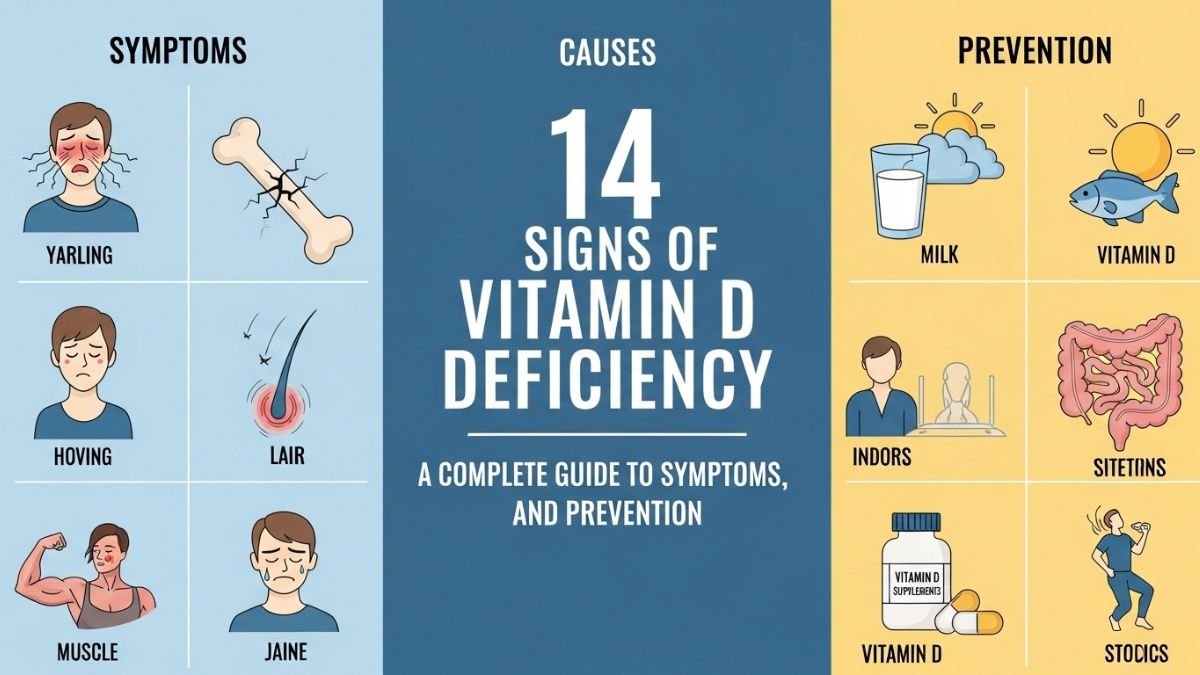
14 signs of vitamin D deficiency can offer important clues when the body may not be getting enough of this essential nutrient. Vitamin D supports bone health, immune function, muscle performance, and several other important processes. When levels become too low, the body may show warning signs that should not be ignored. Understanding the 14 signs of vitamin D deficiency can help people recognize possible concerns and support informed discussions about overall wellness.
Vitamin D deficiency can develop for different reasons, including limited sun exposure, dietary gaps, absorption issues, or increased nutritional needs. Because symptoms can sometimes appear gradually, many people may overlook them.
This guide explores 14 signs of vitamin D deficiency, contributing factors, and practical ways to support healthy vitamin D levels.
Why Vitamin D Matters
Vitamin D plays a role in:
Bone strength
Calcium absorption
Immune support
Muscle function
General wellness
| Function | Why It Matters |
|---|---|
| Calcium Support | Helps maintain bones |
| Muscle Function | Supports movement |
| Immune Role | Supports defense systems |
| General Wellness | Contributes to body processes |
Low vitamin D may affect multiple systems.
1. Fatigue and Low Energy
One of the commonly discussed entries among 14 signs of vitamin D deficiency is persistent fatigue.
Some individuals may experience:
Low energy
Feeling run down
Reduced stamina
Difficulty maintaining daily energy levels
| Symptom | Possible Effect |
|---|---|
| Fatigue | Lower daily energy |
| Low Stamina | Reduced activity tolerance |
Ongoing fatigue can have multiple causes, but vitamin status may be worth considering.
2. Bone Discomfort
Bone discomfort is often included among 14 signs of vitamin D deficiency.
Because vitamin D supports calcium balance, low levels may affect bone-related health.
Possible concerns may include:
General bone discomfort
Sensitivity
Reduced skeletal support over time
3. Muscle Weakness
Muscle weakness may appear in some people with low vitamin D.
Possible experiences include:
Reduced strength
Heavy-feeling muscles
Difficulty with physical tasks
| Muscle Issue | Possible Impact |
|---|---|
| Weakness | Lower performance |
| Reduced Strength | Functional challenges |
Muscle function is often discussed in relation to vitamin D.
4. Frequent Illness Concerns
Some discussions around include immune-related concerns.
Vitamin D has been linked to immune system support.
Some people may pay attention to patterns of frequent illness as one factor to discuss.
5. Mood Changes
Mood-related concerns are sometimes included among .
Some people may notice:
Low mood
Reduced motivation
Emotional changes
| Mood Factor | Possible Effect |
|---|---|
| Low Mood | Reduced well-being |
| Motivation Changes | Daily impact |
Mood changes can have many causes, but nutritional factors may sometimes be explored.
6. Hair Changes
Some people discuss hair-related concerns among .
Possible observations may include changes in hair health.
Hair-related symptoms can have multiple possible explanations, so broader evaluation may matter.
7. Back Discomfort
Back discomfort is sometimes mentioned among .
Because vitamin D relates to bone support, this area may come up in discussions.
8. Slow Recovery
Some individuals may notice slower recovery after physical activity.
This is occasionally included among .
Possible observations:
Longer recovery times
Persistent tiredness after activity
Reduced physical resilience
| Recovery Factor | Possible Concern |
|---|---|
| Slow Recovery | Reduced resilience |
| Post-Activity Fatigue | Lower performance |
9. Increased Risk of Bone Problems
Long-term low vitamin D may raise concerns related to bone support.
This is why it often appears among .
Supportive habits and professional guidance can be important.
10. Difficulty Maintaining Strength
Some people may notice challenges maintaining strength.
Possible signs may include:
Lower endurance
Reduced physical performance
Muscle support concerns
11. Sleep Disturbance Concerns
Some discussions around include sleep-related concerns.
Possible observations:
Restless sleep
Difficulty maintaining restful patterns
Daytime tiredness
| Sleep Issue | Potential Effect |
|---|---|
| Poor Sleep | Lower recovery |
| Daytime Fatigue | Reduced energy |
12. Reduced Physical Performance
Reduced performance may appear in discussions of .
This may include:
Difficulty sustaining exercise
Lower stamina
Reduced mobility confidence
13. General Weakness
General weakness may be another concern sometimes associated with low vitamin D.
Possible observations:
Feeling physically less capable
Reduced resilience
Difficulty maintaining activity
14. Increased Awareness of Nutritional Gaps
The final point among is awareness of possible nutritional gaps.
People with limited sunlight exposure or restricted diets may consider whether vitamin D intake deserves attention.
| Risk Indicator | Why It Matters |
|---|---|
| Limited Sun Exposure | May affect vitamin D levels |
| Low Dietary Intake | May reduce support |
| Higher Needs | May increase risk |
Recognizing risk factors can support prevention.
Common Causes Behind 14 Signs of Vitamin D Deficiency
Several factors may contribute.
Common causes include:
Limited sun exposure
Low dietary intake
Absorption concerns
Lifestyle factors
Increased nutritional needs
| Cause | Potential Influence |
|---|---|
| Limited Sun | Lower vitamin D production |
| Diet Gaps | Reduced intake |
| Absorption Issues | Lower availability |
| Increased Needs | Higher demand |
Understanding causes supports awareness.
Risk Factors Related to 14 Signs of Vitamin D Deficiency
Some factors may raise the likelihood of low vitamin D.
Possible risk factors include:
Older age
Indoor lifestyles
Certain dietary patterns
Limited sunlight exposure
| Risk Factor | Why It Matters |
|---|---|
| Indoor Lifestyle | Less sun exposure |
| Diet Limits | Lower intake potential |
| Age Factors | May affect levels |
| Seasonal Changes | Reduced sun availability |
Risk factors can help guide attention.
Nutrition Support for Preventing 14 Signs of Vitamin D Deficiency
Supportive strategies may include focusing on vitamin D sources.
Examples may include:
Fortified foods
Certain fish
Egg yolks
Other dietary sources
| Food Source | Potential Support |
|---|---|
| Fortified Foods | Added vitamin D |
| Fatty Fish | Natural source |
| Egg Yolks | Dietary contribution |
Diet may play a supportive role.
Lifestyle Habits That Support Healthy Vitamin D Levels
Lifestyle may also matter.
Helpful habits may include:
Balanced nutrition
Safe sunlight awareness
Regular wellness monitoring
Maintaining overall healthy routines
| Habit | Potential Benefit |
|---|---|
| Balanced Diet | Nutrient support |
| Sunlight Awareness | Supports vitamin D production |
| Wellness Monitoring | Improves awareness |
These habits may support long-term wellness.
Common Questions About 14 Signs of Vitamin D Deficiency
What are 14 signs of vitamin D deficiency?
The phrase commonly refers to a range of possible symptoms often discussed in relation to low vitamin D, including fatigue, weakness, and bone-related concerns.
Can 14 signs of vitamin D deficiency appear gradually?
Some people may notice symptoms gradually over time.
Can other conditions cause similar symptoms?
Yes, many symptoms can have multiple causes.
Can prevention help reduce risk?
Supportive nutrition and healthy routines may help support healthy levels.
Key Insights About 14 Signs of Vitamin D Deficiency
Several themes consistently emerge.
| Key Insight | Explanation |
|---|---|
| Symptoms Can Be Broad | Multiple systems may be involved |
| Risk Factors Matter | Lifestyle may influence levels |
| Prevention Supports Wellness | Healthy habits help |
| Awareness Is Valuable | Early attention may matter |
These insights support informed awareness.
Future Awareness Around 14 Signs of Vitamin D Deficiency
Awareness around vitamin D continues to grow.
Important trends include:
Preventive wellness focus
Nutrition education growth
Greater awareness of deficiency risks
More interest in lifestyle-based prevention
| Trend | Potential Impact |
|---|---|
| Prevention Focus | Earlier attention |
| Nutrition Awareness | Better support |
| Risk Education | Improved understanding |
These trends may support better public awareness.
When to Consider Professional Guidance
Because symptoms associated with can overlap with many other concerns, professional guidance may be valuable.
People may consider discussing concerns when:
Symptoms persist
Risk factors are present
Wellness concerns increase
Nutritional questions arise
Professional evaluation can help provide individualized guidance.
Conclusion
14 signs of vitamin D deficiency may offer useful awareness about possible symptoms linked to low vitamin D. Fatigue, muscle weakness, bone-related concerns, mood changes, and lifestyle risk factors are among topics often discussed in relation to deficiency.
Understanding the can support greater awareness, especially when combined with attention to nutrition, preventive habits, and broader wellness practices. Because symptoms may have many causes, informed evaluation is important.
By focusing on healthy routines, awareness of risk factors, and supportive nutrition strategies, individuals can take practical steps to support long-term well-being.
 M Usman